PUBLISHEDPublished on November 27, 2025
Convey, Engage and Convert
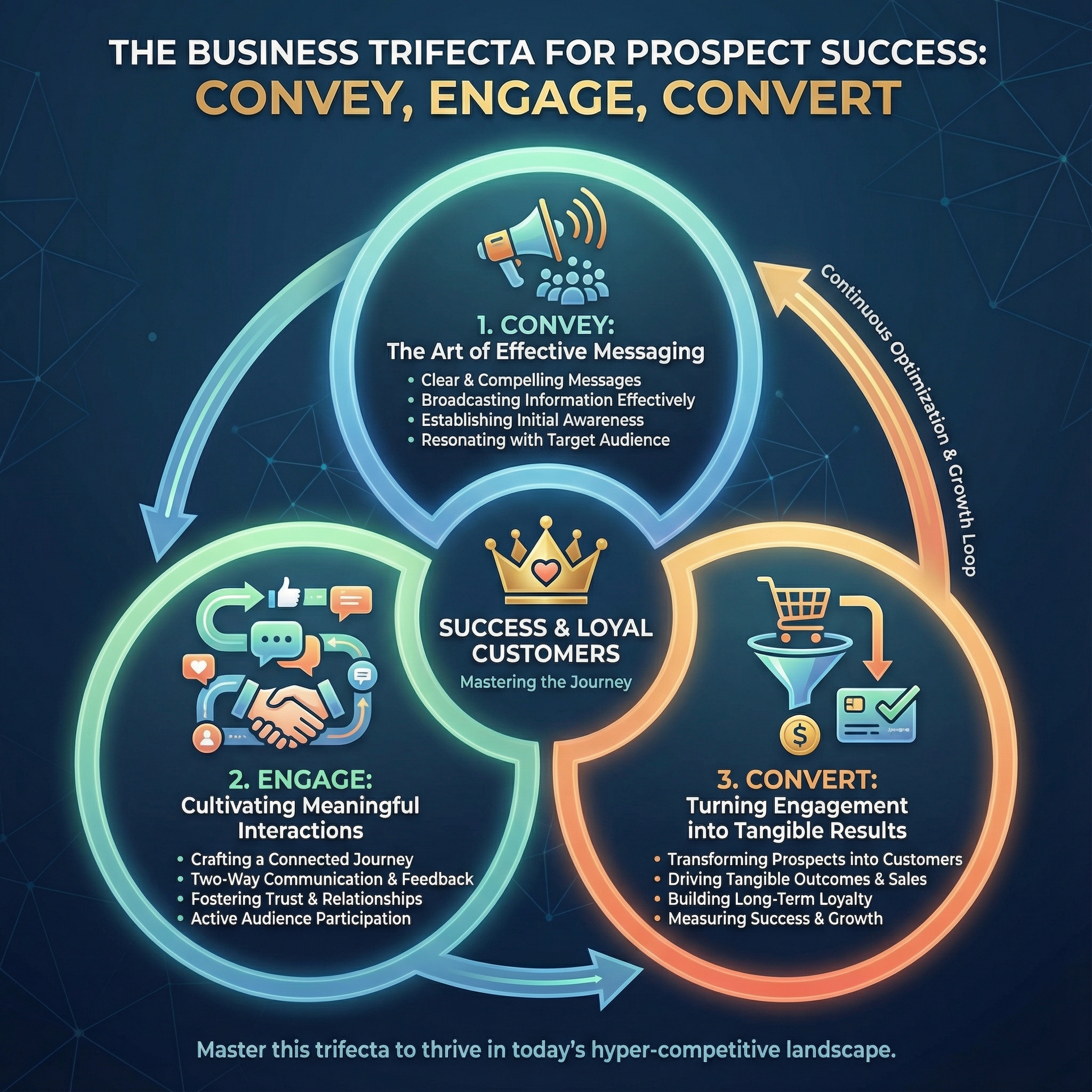
Convey, Engage, Convert: The Business Trifecta for Prospect Success
In today's hyper-competitive business landscape, simply existing isn't enough. To thrive, businesses must master the art of connecting with their target audience. This connection isn't just about broadcasting information; it's about crafting a journey that transforms prospects into loyal customers. This journey hinges on three crucial pillars: conveying your message effectively, engaging your audience meaningfully, and converting that engagement into tangible results. Let's dive into how businesses can master this trifecta.
Conveying Your Message: Clarity, Consistency, and Channels
The first step in attracting prospects is ensuring your message is heard and understood. This requires a strategic approach focused on clarity, consistency, and choosing the right channels.
Clarity: Speak Their Language
Avoid jargon and overly technical language. Your message should be easily digestible by your target audience, regardless of their prior knowledge. Focus on the benefits of your product or service, not just the features.
Example: Instead of saying, "Our platform utilizes a proprietary algorithm for optimized data processing," try, "Our platform helps you understand your customer data faster and easier, so you can make better business decisions."
Consistency: Build a Recognizable Brand
Maintain a consistent brand voice, visual identity, and messaging across all platforms. This reinforces your brand identity and builds trust with your audience. A consistent experience, whether on your website, social media, or in-person events, makes your brand more memorable and reliable.
Example: Apple's consistent focus on simplicity and user-friendliness in both their products and marketing materials has created a powerful and recognizable brand.
Channels: Reach Your Audience Where They Are
Identify the platforms where your target audience spends their time. This could include social media (LinkedIn, Facebook, Instagram, TikTok), email marketing, content marketing (blogs, ebooks, webinars), or traditional advertising. Tailor your message to each channel for maximum impact.
Example: A B2B software company might focus on LinkedIn for lead generation and thought leadership, while a fashion brand might prioritize Instagram and TikTok for visual storytelling and influencer marketing.
Engaging Your Audience: Capturing Attention and Fostering Interaction
Conveying your message is only the first step. You need to capture your audience's attention and keep them interested. This is where engagement comes into play
Captivating Content: Stop the Scroll
Create content that is valuable, informative, and entertaining. Use compelling visuals, storytelling, and interactive elements to grab attention. Think beyond just selling; provide solutions to your audience's problems, share valuable insights, and build a community around your brand.
Example: Red Bull's content marketing strategy focuses on extreme sports and adventure, creating a brand image associated with excitement and pushing boundaries, rather than just selling energy drinks.
Fostering Interaction: Two-Way Communication
Encourage interaction through comments, polls, quizzes, contests, and live Q&A sessions. Respond promptly to questions and feedback. Creating a two-way dialogue builds trust and strengthens your relationship with your audience.
Example: Wendy's witty and engaging Twitter presence has made them a social media sensation, fostering a loyal following through humor and direct interaction with their customers.
Personalization: Tailor the Experience
Use data and analytics to personalize your messaging and content based on individual preferences and behaviors. This makes your audience feel valued and increases the likelihood of engagement.
Example: Amazon's personalized product recommendations based on browsing history and past purchases create a more relevant and engaging shopping experience.
Converting Prospects: Guiding Them Towards Action
Engagement is valuable, but ultimately, you need to convert prospects into paying customers. This requires a clear call to action and a seamless user experience.
Clear Call to Action (CTA): Tell Them What to Do
Make it easy for prospects to take the next step. Use clear and concise CTAs that tell them exactly what you want them to do, whether it's "Sign Up for a Free Trial," "Download Our Ebook," or "Request a Demo."
Example: Netflix's prominent "Join Free for a Month" button on their homepage is a clear and compelling call to action.
Seamless User Experience: Remove Friction
Ensure a smooth and intuitive user experience throughout the entire customer journey, from initial contact to purchase and beyond. Optimize your website and landing pages for speed and mobile responsiveness. Make it easy for customers to find information and complete transactions.
Example: Shopify's user-friendly platform makes it easy for entrepreneurs to set up and manage online stores, removing friction from the process of starting an online business.
Trust Signals: Build Confidence
Display testimonials, case studies, and security badges to build trust and credibility. Show potential customers that others have had positive experiences with your product or service.
Example: Many e-commerce websites display customer reviews and ratings to help potential buyers make informed decisions.
Measuring Success: Analytics and Continuous Improvement
The journey doesn't end with a conversion. It's crucial to track your results, analyze your data, and continuously improve your strategies.
Track Key Metrics: Know Your Numbers
Monitor key metrics such as website traffic, engagement rates, conversion rates, and customer lifetime value. These metrics provide valuable insights into what's working and what's not.
Example: Google Analytics provides detailed data on website traffic, user behavior, and conversion rates, allowing businesses to track the effectiveness of their marketing campaigns.
A/B Testing: Optimize for Results
Experiment with different messaging, visuals, and CTAs to see what resonates best with your audience. A/B testing allows you to optimize your campaigns for maximum impact.
Example: Running A/B tests on different email subject lines can help you identify the most effective way to increase open rates.
Continuous Improvement: Adapt and Evolve
The business landscape is constantly changing. Stay up-to-date on the latest trends and technologies. Be willing to adapt your strategies based on data and feedback.
Example: Businesses that embraced social media early on and continuously adapted their strategies to the evolving platforms have been able to build strong online communities and generate significant leads.
Conclusion
In conclusion, mastering the art of conveying, engaging, and converting prospects is essential for business success in today's competitive market. By focusing on clarity, consistency, and the right channels when conveying your message, creating captivating content and fostering interaction to engage your audience, and guiding them towards action with clear CTAs and a seamless user experience, you can transform prospects into loyal customers and achieve sustainable growth. Remember to continuously measure your success, analyze your data, and adapt your strategies to stay ahead of the curve. The business trifecta is not a one-time fix, but an ongoing process of refinement and optimization. Embrace it, and watch your business thrive.
What did you think?
Share this post: